
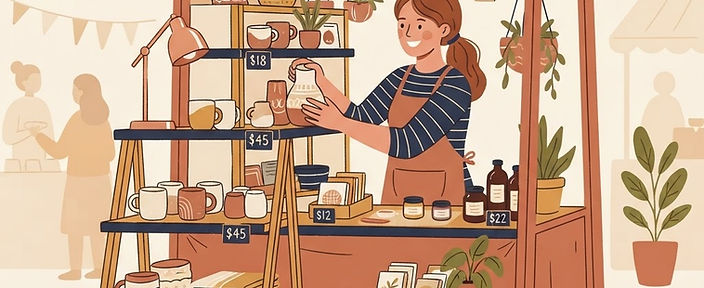
Underpricing feels generous to customers, but it quietly starves your business. If your price only covers what you bought the item for, you are working for free.
Know your true cost
Your true cost is more than the item you bought. Include transport, packaging, data used for marketing, airtime, and a wage for your own time. A simple way to capture this is a monthly overhead list divided across what you expect to sell.
The simple pricing formula
- Cost: what it takes to produce or buy the product
- Wage: what your time on this sale is worth
- Profit: the amount that grows the business
Add all three together, then compare with what your market pays for similar value. If your number is far above the market, find ways to reduce cost or to offer more value, not to erase your profit.
Test, then adjust
Prices are not permanent. Try your price for a month, watch both sales and profit, and adjust. A small, steady profit that grows is worth more than a busy month that ends with nothing left.
Never compete on being the cheapest
There will always be someone selling cheaper. Compete on trust, quality, and service instead. Customers who pay a fair price usually come back - customers who pay the lowest price leave for the next discount.
#pricing#profit#small business